Why Real Time is Required for Remote Patient Monitoring

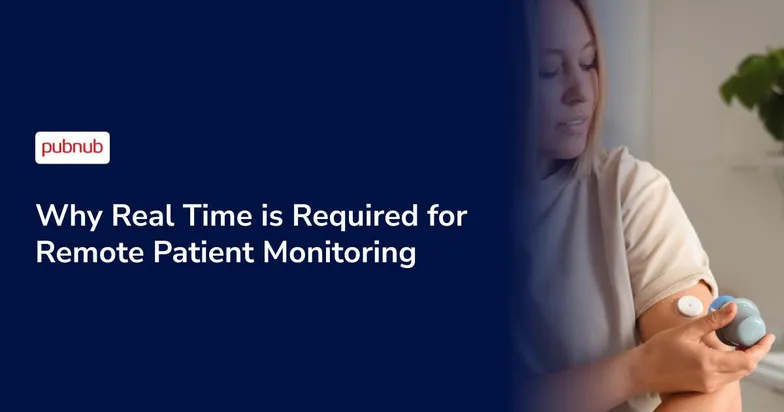
Remote patient monitoring platforms depend on experiences that feel live when patients leave your care: vital signs that reach clinician dashboards in seconds, online status that shows which health wearables are still transmitting, and threshold alerts that protect Hospital-at-Home coverage without a refresh button. Care buyers already compare your product to remote patient monitoring software and remote patient monitoring devices that promise continuous monitoring, telemonitoring dashboards, and wearable health monitoringg, as these expectations shaped by consumer and clinical gear patients already wear, from Fitbit and Apple Watch to fitness trackers, smart watches, activity trackers, pulse oximeters, blood pressure monitors, blood pressure cuff kits, glucometers, weight scales, pacemakers, and insulin pumps. It is a difficult problem to solve well when information is transmitted in batches and point-to-point device integrations leave oxygen saturation and heart rate gaps, bury motion artifacts as false alarms, and push virtual wards toward unreliable workarounds.
While choosing a CGM vendor, wearable medical devices partner, biosensors stack, or EHR remote-patient-monitoring module is a major undertaking on its own, you still need the infrastructure that turns wearable sensors, high-frequency ticks, clinician notifications, and audit trails into one real-time pattern your product can scale. To implement reliable RPM for digital healthcare, you need infrastructure that scales through concurrent home patients and multi-facility virtual wards, low latency so vital signs and on-call escalations feel actionable, and secure delivery that supports HIPAA requirements, BAAs, data security reviews, and token-scoped access when messages include protected health information. This is where PubNub can help.
PubNub has everything you need to build real-time interactive apps, drive innovation, and deliver experiences that support clinical trust and growth across RPM and digital health surfaces. Thousands of customers depend on us to deliver messages in less than 100ms globally, process 2 trillion+ transactions per month, and back production workloads with a 99.999% uptime service level agreement (SLA), with peak concurrency references on the order of 10.5 million+ concurrent users for large online events. We offer 20+ SDKs for web, mobile, IoT, and server, plus Presence for device and clinician connectivity, Signals for high-frequency heart rate, oxygen saturation, and other wearable ticks, Access Manager for least-privilege patient channels, Message Persistence for reconnect catch-up and audit-friendly history, mobile push notifications for urgent alerts when apps are backgrounded, and Functions and Events & Actions to filter noisy samples, route escalations, and export events for analytics without standing up a separate realtime cluster per workflow.
Keep reading to learn why real-time engagement matters for remote patient monitoring and clinical time-to-action, which features wearable streams must ship for patients and care teams, and where real-time RPM is heading.
Why real-time features matter for remote patient monitoring
Every program’s device mix differs, but failure modes look familiar: a wearable posts vitals and only reaches the dashboard minutes later, a remote patient monitoring system shows an out-of-date state while the patch is offline, oxygen saturation dips go unnoticed between poll intervals, or an alert fires without informing a clinician.
Real-time features are not just push notifications for vitals. They are the delivery path for patient remote monitoring, wearable health monitoring, and clinical staffing of virtual wards that have to move with live physiology. Industry pressure is relentless, as CMS RPM documentation has strict requirements, extensive chronic disease management programs for hypertension, COPD, kidney dysfunction, and atrial fibrillation, plus clinician fatigue from false alarms all raise the bar. When continuous monitoring slips, patient outcomes suffer, and patient adherence drops.
Hearo understands the importance of real-time features, as they help remote patients live more independently. Hearo leverages PubNub to support data capture and communication in their product in a way that allows them to easily push features, scale quickly, and expand their platform's functionality with a small team. PubNub’s messaging services map those expectations to durable features: pub/sub channels, multiplexing across many patients, Signals for high-frequency lanes, presence for device and clinician availability, history for replay and audits, and access control so one client cannot read every patient’s traffic.
Implementing real-time remote patient monitoring features
Every patient has unique devices and care pathways, so whether you build remote patient monitoring software, a patient monitoring system for acute or chronic populations, medical wearables gateways, or multi-tenant remote patient monitoring platforms, you still need each piece in place so real-time data reaches the right clinician, role, and device:
- Implement Secure, HIPAA-Aligned Infrastructure: Wearable streams often include identifiers and readings that qualify as PHI. Build on encryption in transit and token-based access that your security and legal teams can review for data security. When messages include protected health information, follow the same safeguards outlined in HIPAA-compliant chat. PubNub supports BAAs, SOC 2 Type II, and regional data options alongside your own retention and audit policies.
- Stream High-Frequency Vitals With Signals: Heart rate monitors, pulse oximeters, accelerometer bursts, electrocardiograms, and other wearable sensors can update dashboards without a full message payload on every sample. Signals keep continuous monitoring and online telemonitoring feeling instant without runaway cost, reserving durable messages for alerts, acknowledgments, and events bound for electronic health records.
- Catch Up After Disconnects and Backgrounding: Patients move constantly, gateways reboot, and clinicians background apps mid-shift. Alert them with push notifications for threshold breaches, device-offline escalations, fall risk signals, and care-team handoffs that keep patient engagement alive between visits. Message Persistence supports ordered replay with timetokens so clients reconnect and fetch missed events instead of silently falling behind.
- Name Your Channels by Tenant, Patient, Device, and Lane: Map pub/sub channels to patients, devices, care-team rooms, and alert queues so you can pull history, manage permissions with access control, and track analytics. Separate control, durable message, and high-frequency signal lanes so mobile apps, clinician consoles, and partner integrations share one real-time layer without cross-talk between unrelated patients, regardless of the source.
- Reflect Device and Clinician Availability With Presence: Know which remote patient monitoring devices are transmitting, which virtual-ward patients are online, and which clinicians are available to accept an escalation. The same presence patterns used in telehealth lobbies apply to Hospital-at-Home and RPM: join, leave, and state-change events give operators real-time visibility before gaps compound and let you handle multiple connections efficiently instead of spamming the floor.
- Route Events on the Edge: Use PubNub Functions to drop obvious motion artifacts, attach confidence metadata, enforce thresholds for hypertension or arrhythmias, and forward qualified alerts without standing up a separate real-time cluster for every rule. Export presence and alert events through Events & Actions when leaders need utilization metrics, time-to-action, and analytics pipelines for remote patient monitoring solutions, including feeds that artificial intelligence models score before clinical decision-making.
- Integrate With Wearables, Gateways, and EHR Systems: PubNub does not replace your clinical decision logic, device firmware, continuous glucose monitoring stack, or electronic health records documentation workflow. Whether events originate in patches, rings, CGMs, glucometers, home hubs, or Epic/Cerner connectors, normalized messages can reach clinician UIs, caregiver portals, and analytics pipelines on one application-centric real-time layer your product teams share, without a new point-to-point integration for every wearable medical device.
Where remote patient monitoring and wearables are heading
RPM products are moving past episodic check-ins toward continuous, multi-device, and policy-aware monitoring that spans bedside discharge, Hospital-at-Home, and chronic disease management:
- Wearables as a real-time feed by default: Health wearables, biosensors, fitness trackers, and wearable sensors only change patient outcomes when heart rate, oxygen saturation, sleep patterns, and alerts arrive during the clinical window, not in the next batch sync.
- Presence-first virtual wards: Care coordinators need live device-online and clinician-available signals before they escalate or document a gap in continuous monitoring.
- Confidence-aware alerting: Multi-stage filters, provenance metadata, and role-based channels replace raw threshold spam that destroys trust in remote patient monitoring systems, especially for arrhythmias, atrial fibrillation, hypertension, COPD, and kidney dysfunction pathways.
- Hospital-at-Home and acute RPM: Shorter monitoring windows and higher acuity still need the same real-time rail for vitals fan-out, offline buffering, and audit-ready transmission history.
- Patient engagement and patient adherence: Nudges, reconnect prompts, and telehealth handoffs only work when the delivery layer reaches smartwatches, activity trackers, and home devices patients actually keep using.
- Artificial intelligence on a real-time rail: Models that score fall risk or triage electrocardiograms still need low-latency streams and explainable alert metadata before clinical decision-making.
- IoT healthcare at mixed connectivity: Cellular gateways, BLE phone bridges, and store-and-forward paths still converge on one streaming backbone, so underserved patients are not left out of patient remote monitoring programs.
- Privacy and compliance as product: As remote patient monitoring platforms bridge consumer devices and clinical workflows, HIPAA-ready messaging, data security controls, consent-aware Functions, and scoped tokens become competitive advantages.
The organizations that pull ahead are not the ones with the longest remote patient monitoring company feature checklist in an RFP. They are the ones whose patients, devices, and care teams share the same live picture during an oxygen saturation dip, a CGM excursion, or a night-shift escalation without a refresh button.
What's next?
Real-time infrastructure is what turns wearable investment, electronic health records census, and RPM program design into coordinated care: fewer missed vitals, less alert fatigue, faster clinician response, stronger Hospital-at-Home coverage, better patient engagement, and an audit trail compliance and reimbursement teams can trust.
If you are building or extending remote patient monitoring with wearables, PubNub supports the full real-time layer, from secure messaging and Presence through Signals, push, edge orchestration, and enterprise security.
Explore how PubNub supports digital healthcare by browsing our healthcare customer stories and Digital Health resources. You can then sign up for a free PubNub account to start prototyping with our in-depth documentation.
Talk to our team when you are ready to review architecture, time-to-action ROI, and how real-time features should sit next to your wearable and remote patient monitoring roadmap.