Why the second screen is becoming a strategic layer for media
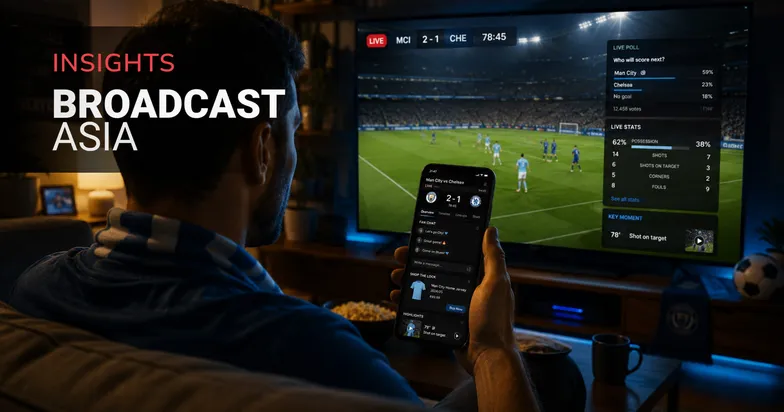
Something is changing about the way we watch live matches, shows, or streams on TV. We can be engrossed, but still have one eye on our phones, engaging on social platforms, messaging apps, shopping sites, etc. often with the subject of the show we're watching. It could be checking out what else that actor was in, or the last time that team scored so many points against this opponent. That second screening behavior changes how media companies think about content, engagement, and monetization.
That was a key theme at BroadcastAsia in Singapore recently. It was clear that audience experience is no longer contained inside the primary video stream.
Now the key question is whether broadcasters, rights holders, and platforms can design useful experiences around that behavior instead of leaving the value to third-party platforms like the social media behemoths.
Why the second screen matters now
Second-screen behavior has existed for years, but the business context has changed. As advertisers place more value on first-party data, media companies need better ways to understand audience intent, preferences, and participation on their own properties.
The second screen can help connect passive viewing with active engagement. Polls, trivia, live stats, chat, rewards, commerce, personalized offers, and post-event follow-ups all create moments where audiences do more than watch.
This does not mean every broadcast needs a crowded companion experience. The strongest opportunities are the ones that add value to the viewer while giving the media company more direct control over engagement, data, and monetization. As one participant put it, if someone wants to buy a dress they see on a contestant on a dating show, why not provide that option via a single click on their phone?
Five key takeaways from BroadcastAsia
1. The main video is no longer the whole product
In the session "AI in Live Sports: Monetising Real-Time Highlights," CK Lee, CEO of SPOTV SE Asia, noted that second-screen behavior is separating video consumption from monetization. That distinction matters because value may now appear around the stream, not only inside it. As ad revenue continues to decline this becomes increasingly important.
For broadcasters and rights holders, the live feed becomes the anchor for a broader set of interactions. Highlights, stats, social clips, fan conversations, commerce prompts, and creator commentary can all extend the value of the core content.
2. Monetization needs to follow attention
CK Lee also noted pressure on the monetization pie in Asia and the challenge of younger audiences having less time for full sports broadcasts. The idea of viewership models built around long, uninterrupted viewing sessions is a thing of the past.
The implication is not simply to create more short-form content. Media companies need monetization formats that fit how audiences actually engage, including sponsored highlights, interactive stats, mobile-first companion experiences, live commerce, and fan participation.
3. Highlights are becoming products in their own right
Mousumi Dutt, Executive Producer at Infront Pan Asia, observed that many audiences increasingly watch highlights rather than full events, and that AI can help create more of these moments, including for sports such as badminton.
Highlights are no longer just recaps. For many viewers, they are an entry point, a re-engagement tool, and a format built for sharing across mobile and social channels.
4. Personalization becomes more important as attention fragments
Mousumi Dutt also noted that sports has had to adapt to the viewer and become more personalized and enjoyable. In a second-screen environment, relevance becomes a practical requirement rather than a nice-to-have feature.
Personalization can shape which clips fans see, which player stories are surfaced, which language they receive, and how they move between live coverage and companion content. The business impact is clearer engagement paths, not just more content volume.
5. Creator communities show where engagement is moving
In the session "The Future of Content Creation and Video Platforms in a Hybrid World," Nikhil Kharoo, Global Head of Partnerships at Razer Inc., emphasized that experience has come to the forefront over individual pieces of content. He also pointed to the importance of making stories relevant to communities.
That is a useful lens for second-screen strategy. Creator ecosystems are not just promotional channels. They are active environments where audiences react, discuss, remix, and build culture around media moments.
Closing thoughts
As media consumption shifts rapidly across live streams, highlights, social feeds, creator content, and real-time chat, BroadcastAsia made it clear that the second screen is no longer a side note, it’s becoming central to how audiences experience, participate in, and monetize media. For media companies, the challenge is not just to optimize individual channels, but to design fluid audience journeys that connect live events, discovery, participation, and commerce seamlessly.
Real-time software like that provided by PubNub is mission-critical in this landscape, acting as the connective tissue for engagement and interactivity. Features like live polls, interactive stats, shoppable moments, recommendations, and community chat need to be perfectly synced to the main viewing experience, such as a smart TV. These systems also allow companies to tie audience actions directly to monetization opportunities, moving beyond traditional ads toward richer commercial surfaces that thrive on participation and authentic audience intent.