
When every goal can be captured: Amazon's Gregoire Rouyer on cloud, personalization, and the future of sports media
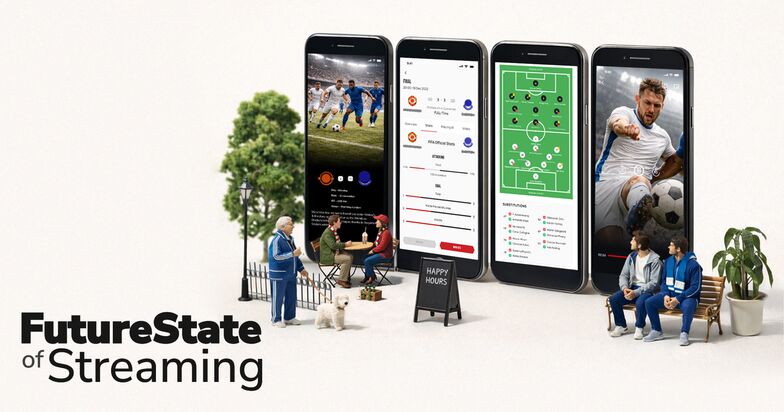
We recently sat down with Gregoire Rouyer who leads partner strategy for broadcast, sports, betting, and gaming at Amazon Web Services (AWS), for the Future State of Streaming series. He’s a veteran of the media industry and works with software vendors and media customers to bring cloud-based solutions into live production. The conversation kept coming back to one idea: the shift to the cloud isn’t just a change of where the gear lives. It opens up new possibilities to scale, experiment, and serve audiences in new and exciting ways.
The value of cloud-based production
When it comes to moving media production to the cloud, Gregoire points to the same reasons teams choose it over on-prem: “Scalability, resiliency, efficiency of production and operations, economy of scale. But the most important one is innovation.”
High-volume events make the case quickly. During something like major sporting events or a major election, you’re not producing one game or one show. You’re producing dozens of events at once, often from many locations. The old approach was to buy or rent more hardware, use it for a short burst, then let it sit. Equipment bought for one cycle might still be in use a decade later. With cloud-based production, you spin up the capacity you need when you need it and, as Gregoire put it, “you get rid of the technical debt, essentially, that you have with on-prem solutions.”
The upside isn’t only for mega-events. Pay-as-you-go and elastic scale make it easier to try new things. You can test an alternative feed for a specific audience, add a feature like chat to a live stream, and see quickly whether it works. “Because you’re not making an investment, you’re not taking a financial risk. You’re taking a very small financial risk when you try something new,” he said. “If it’s not working, you move on. And if it’s working, you double down.”
Personalization and alternative content feeds
A lot of the discussion for where the media industry is heading turned on a simple idea: not everyone wants the same cut of the same game. Gregoire put it like this: “It’s recognizing that everybody doesn’t want to consume your content in the same way. And that it is actually becoming really cost effective to diversify your content production and offer more parts of your audience the specialized content they want to watch.”
In motorsport, that already shows up in options like “follow your favorite driver”: one feed stays with a single driver, using over-the-shoulder angles and automated cuts from cameras around the circuit. Even down to the level of the driver you can support a drama-focused feed and a technical feed (engine data, tire data). “You can spin up different versions or different flavors of the same feed very easily,” he said, “and serve different audiences with the content they want to watch.” The same main feed can be localized into multiple languages, from subtitles to full dubbing, including AI-driven options for smaller markets. “You have a new world of options for content rights owners who want to reach new audiences.”
That idea extends beyond pro leagues. Gregoire used Chelsea and its fan base as an example. Every weekend, across the area that the club influences, fans are scoring hundreds of goals in local and youth games. “We can find better goals in these couple hundred goals than the goals that Chelsea scored. And we can show them to the world… It stays in the family. It comes from their community and it’s rewarding their community for playing soccer.” Create footage around Chelsea fans scoring goals, and you’re serving a specific audience with content that’s meaningful to them.
The rise of grassroots sports
“Grassroots sport is growing. I believe it’s a $35 billion market in the US in 2025.” A lot of that goes to participation and performance, but more is flowing into media. Alongside parents with smartphones on the sideline, “you also have a number of companies that are building and setting automated cameras that use AI to follow the action. And these cameras generate insights that can be used for coaching, but they also generate generally good video that can be used for entertainment.”
The first shift is that footage exists at all. “A couple of years ago, there was no footage. So if you wanted to watch your nephew’s or niece’s game, say a soccer game that weekend, there was no way to do it because it was not available. Now there’s a high chance that there is a stream somewhere.” The second shift is that broadcast tech is within reach for smaller audiences. “Broadcast technology is becoming affordable, and available for content that is not watched by millions of people. This is thanks to running it in the cloud and optimizing the technology and leveraging AI to run it autonomously.”
So a high school or recreation league game can have a first-down line and a look that feels closer to a traditional broadcast. “You can essentially make a grassroots broadcast, a grassroots stream, look and feel like a broadcast stream. It’s not going to be the same as ESPN or Fox Sports 1. But it’s going to be pretty damn good. And it’s going to be good enough for the people who care about the game to actually watch the game.”
If every goal can be captured and indexed, you can surface the best moments and build highlight reels. “As long as you have access to the footage and you have a way to index this footage and find the good bits, you can create some creative content.” He added: “Everybody should be able to have a small highlight reel and bragging rights. For instance they may have scored an amazing goal. It might have been a total fluke, but it happened once and they want to show it.”

Advanced monetization and targeted advertising
When the conversation turned to monetization, Gregoire was clear about the volume effect. “The more content you have, the more opportunities you have to place an ad.” And the definition of “ad” is broad: mid-rolls, banners, virtual placements, product placement, calls to action. “So we’re creating more inventory. Then, of course, inventory is only valuable if people are watching. But it gets way more valuable if you know exactly who’s watching. So the targeting is becoming much better.”
Personalized streams make that targeting possible without being invasive. If someone is on a team-specific or “follow your favorite driver” feed, you already know something about them. “Knowing who is watching your stream is going to really enable brands to get a better return on investment for their ad money, but also avoid product placement that is damaging to their brand.” He gave a sharp example: “You can avoid bad mistakes like pushing the jersey of the guy who just scored a penalty kick to fans of the other team.” In a world of tighter privacy rules, that’s a plus as you can respect the privacy of your customers and not bombard them with requests to accept more cookies and share more personal data. You already know what they like based on what they watch.
He also called out a format that’s gaining traction: “A recent phenomenon is the rise of the pause ad. It appears when you decide to interrupt the viewing experience. And it stays on the screen until you hit play. That is a very clever way of displaying an ad. It’s non-intrusive because it’s not interrupting your viewing experience.”
Slicing media rights
On rights and licensing, Gregoire described a shift from blanket deals to more granular packages. “I think we’re seeing the emergence of new categories of rights. Some people call it interactive rights.” Traditionally, you sold the game and the buyer did one main broadcast with a fixed number of cameras. “I think some rights owners are starting to realize that they can segment the rights in a smarter way and offer different packages to different companies.”
You can slice the same event into different products: the main broadcast, a single-camera feed for creators, data for fantasy or betting, or limited streams for specific platforms. “Rights owners can be creative and more granular in the way they sell their rights, and that enables them to probably maximize their revenue they get from the rights even as the market for broadcast rights becomes more complicated.”
For smaller or emerging sports, that’s especially useful: “That’s especially interesting for emerging sports, I believe, because the big leagues are always going to stand out for their rights. Emerging sports, that’s an opportunity for them to create incremental revenue by slicing the rights in a smart way.”
Future outlook: the next 15 years
Gregoire suggested interactivity and personalization are key trends to follow in the next few years. “I do believe that the personalization of the stream and the interactivity around the stream is going to grow and it’s going to totally change the way that we experience sports.”
He pointed to something that’s already here with some partners: “I don’t think we’re far away from being able to watch a game and have a chat room with your close friends and keep the banter on, and then move to another chat room that is associated to the same stream that is talking about something totally different. This is something that some of our partners are offering today. I think it’s going to make sports content more relevant for many people.” He’s also curious about virtual worlds and how younger audiences will watch and engage with sports in new environments. “Hopefully it’s going to trickle down to grassroots sports as well and enable more people to practice and enjoy sports.”
This conversation was part of the Future State of Streaming series. Check out the podcast to hear the full discussion. You can connect with Gregoire Rouyer on LinkedIn.
