
From viewers to participants: How smart platforms are redefining entertainment
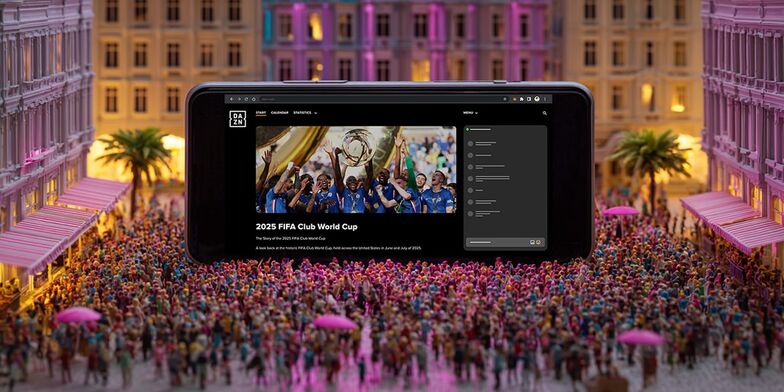
Remember when TV was something you just... watched?
Picture this: You're eight years old, sprawled on the living room carpet, watching Saturday morning cartoons. If you missed your favorite show, too bad. If you wanted to talk about it, you had to wait until Monday at school. The TV talked, you listened, end of story. And the same was true for other media, such as a radio.
That world is dead.
Today's audiences don't just watch or listen to your content. They react to it in real time, chat with friends while streaming, vote on outcomes, and expect to shape what happens next. "Passive live broadcast of just about anything is not enough," warns Chris Allen, CEO of Red5. "I think it's gonna drop off."
Your users are multitasking (and that's actually good news)
Let's start with a reality check. Right now, 86% of your viewers are using another device while watching your content. That might sound like a problem, but smart platforms have turned it into their biggest advantage.
Take LaMusica, the Latin music streaming platform for the hispanic population in the US. They were losing listeners during commercial breaks until they did something simple: they added chat and a layer of live interaction. Suddenly, users started staying for ads because they were too busy talking to each other to leave. "All of our metrics have gone up," explains Dennis Vaque, Head of Technical Operations, LaMusica. "Every aspect of our app has become better by having real-time communication."
The lesson? Stop fighting for attention. Start building for participation.
How the smart platforms are adapting
You may remember the time when radio stations would run contests where they would ask the audience to call in, and award winners based on "caller number 9" scenarios. Many callers would struggle to get through on jammed phone lines so participation was arbitrarily limited. Now? By running contests through online interactive chat and polls using PubNub, Dennis from LaMusica points out that "Everybody gets through. Everybody has a chance to participate. Everyone can be entered to win by just participating in the chat."
This shift isn't just about technology. It's about psychology. Modern viewers, especially younger ones, grew up playing video games where their actions mattered. They now expect the same level of agency from all their entertainment. The companies getting this right aren't just adding chat boxes. They're reimagining what streaming means.
Red5 is betting on real-time everything: When Brazil legalized sports betting, they instantly became the world's largest sports betting market. Red5's response? Build platforms where fans can watch games, chat with friends, and place bets simultaneously. "We're getting to a point with live events that it's just going to be multi-directional," Chris Allen explains.
LaMusica is personalizing culture: Instead of broad demographic targeting, the radio station can create content for specific communities. "Puerto Ricans, Dominicans, Cubans, Mexicans," Dennis notes. "They're each very, very different." Generative AI has improved over the last few years in its ability to understand these nuances, and is getting better at speaking to an audience based on its cultural context.
Netflix is gaming the system: Literally. They're not just making interactive movies like "Bandersnatch." They're launching cloud gaming, where you can play games tied to your favorite shows using your phone as a controller.
The pattern is clear, successful platforms are becoming interactive entertainment hubs, not just content delivery systems.
The technology has finally caught up to the vision
Here's the thing about interactive media: we've been trying to build it for decades. Remember Flash games? Early streaming attempts? The vision was there, but the infrastructure wasn't.
Now it is. "The technology is now caught up to be able to make this stuff feasible," Allen points out. Sub-500 millisecond latency makes real-time interaction possible at massive scale. 5G networks mean mobile users can participate just as seamlessly as desktop users. But here's what most platforms are missing: interactive media isn't just about fast video delivery. You need two systems working together perfectly. Ultra-low latency video streaming AND scalable real-time messaging.
"This is why our partnership with PubNub is absolutely essential," Allen explains. "We need a hugely scalable data layer to be able to go along and synchronize with the live videos."
Most streaming platforms are still thinking like broadcasters. They optimize for pushing content out. The winners are optimizing for conversation flowing back and forth.
The uncomfortable truth about what's coming next
Interactive media is just the beginning. The platforms that win the next phase will be those that turn viewers into creators, communities into content generators, and participation into profit. To be a platform like this, start by prioritizing community over content. This means thinking beyond shallow demographics to understand deep cultural context. Plan for participation from day one. Every piece of content should answer the question: "How can our audience participate?" Don't just stream a soccer game; let fans pick commentators, chat with supporters, and influence camera angles, as Red5's clients do.
"Is it entertainment, or is it selling?" Allen wonders about live shopping, which is seeing growth worldwide, but particularly in China. "Hopefully it's a bit of both." The platforms that win will be those that give users the tools to decide for themselves.
Your next move starts now
The streaming revolution isn't coming. It's here. If you are in the media space, your users are already participating in interactive experiences on other platforms. They're already expecting real-time engagement, personalized content, and community connection. Because here's the secret the winning platforms already know: you don't have to predict the future of interactive media. You just have to give your users the tools to create it.
The audience is ready. The technology is ready. The only question left is: Are you?
